Introduction: Turning Nerves into Confidence
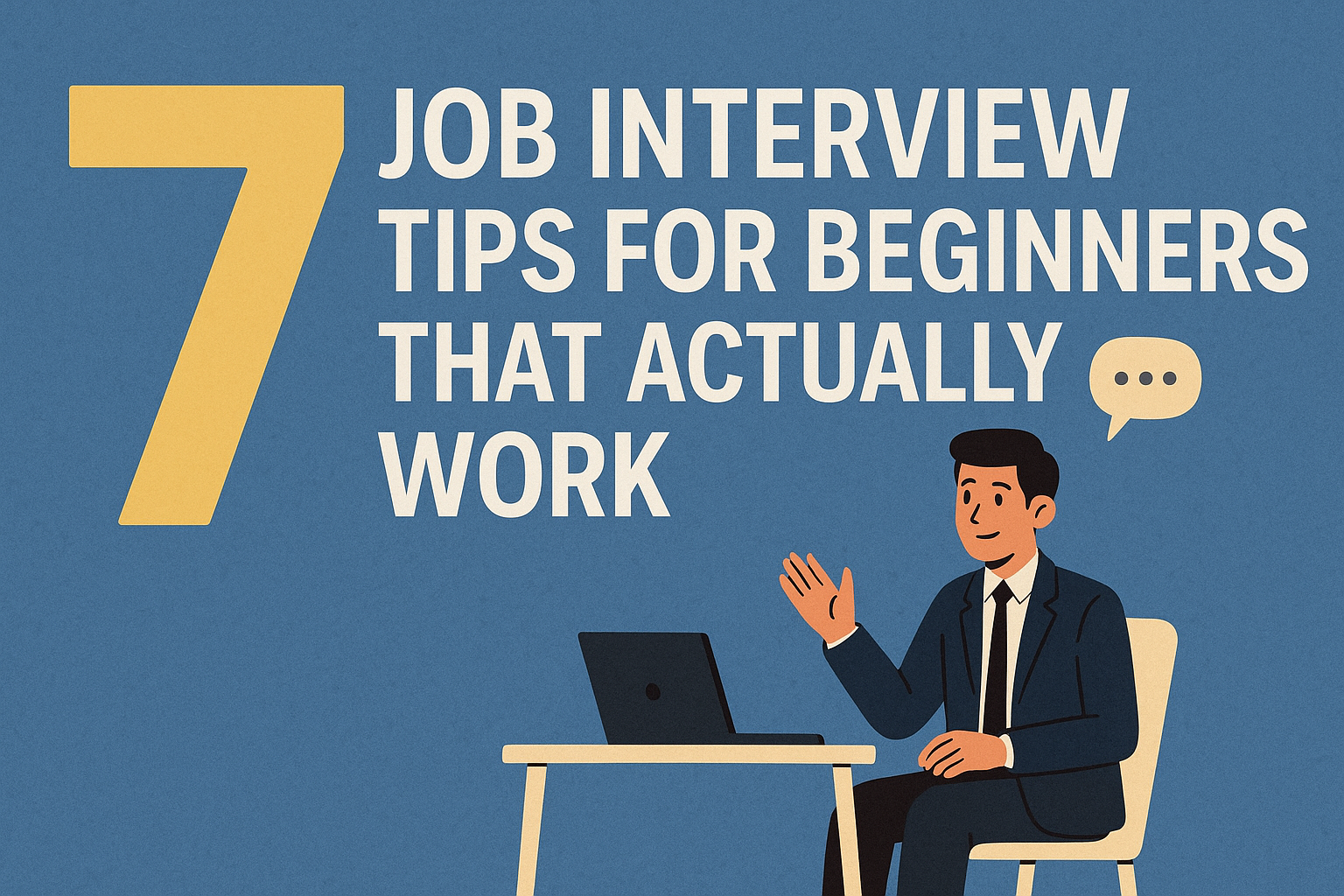
We all remember the first time we walked into a job interview. Sweaty palms, shaky voice, racing thoughts— it’s normal to feel nervous. But here’s the truth: interviews don’t have to be terrifying. With the right preparation and mindset, even beginners can walk into the room with confidence and leave a lasting impression.
If you’re about to face your first job interview or simply want to perform better, these 7 proven job interview tips for beginners will guide you step by step. They are simple, practical, and designed to help you shine, even if you’re new to the process.
1. Research the Company Beforehand
One of the biggest mistakes beginners make is walking into an interview without knowing enough about the company. Employers expect you to understand who they are and why you want to work with them.
- Check the company website: Learn about their mission, products, and values.
- Read recent news articles or press releases: Stay updated on their achievements.
- Look at LinkedIn profiles of employees: This gives you insight into company culture.
💡 Example: Imagine the interviewer asks, “Why do you want to work with us?” Instead of giving a generic answer, you can say, “I admire how your company is expanding into eco-friendly technology, and I want to be part of that innovation.” That shows preparation and genuine interest.
2. Practice Common Interview Questions
Practice makes perfect—especially in interviews. Most companies ask standard questions like:
- “Tell me about yourself.”
- “What are your strengths and weaknesses?”
- “Why should we hire you?”
By practicing, you can structure your answers confidently without sounding robotic. Use the STAR method (Situation, Task, Action, Result) to answer behavioral questions effectively.
💡 Tip: Record yourself answering questions. Watching the playback will help you notice if you’re speaking too fast, avoiding eye contact, or using filler words.
3. Dress Appropriately for Success
First impressions matter. Your outfit can speak before you even say a word. Dressing appropriately shows that you respect the opportunity and understand professionalism.
- For corporate jobs, wear formal attire: a well-fitted suit, blazer, or neat shirt with trousers.
- For creative or startup roles, smart casual attire may be more appropriate.
- Always ensure your clothes are clean, ironed, and comfortable.
💡 Example: Imagine two candidates. One arrives in wrinkled jeans and sneakers, while the other walks in with polished shoes and a crisp shirt. Who do you think the interviewer remembers more positively?
4. Improve Your Body Language
Did you know that over 50% of communication is non-verbal? Your body language can either strengthen your message or completely undermine it.
- Smile genuinely when greeting.
- Maintain eye contact without staring.
- Sit upright with open posture.
- Use hand gestures naturally to emphasize points.
💡 Scenario: If you cross your arms and avoid eye contact, the interviewer may see you as nervous or disinterested. But if you sit confidently and lean in slightly, you show enthusiasm and engagement.
5. Ask Smart Questions
At the end of the interview, you’ll likely hear: “Do you have any questions for us?” This is not just a formality. It’s your chance to show interest and critical thinking.
Smart questions include:
- “What does success look like in this role?”
- “How does the team collaborate on projects?”
- “What are the company’s goals for the next year?”
Avoid asking about salary too early unless the interviewer brings it up.
💡 Example: If you ask, “How do you support employee growth?” it shows that you are career-focused and looking for long-term opportunities.
6. Follow Up After the Interview
Many beginners forget this crucial step. Sending a thank-you email within 24 hours shows professionalism and gratitude.
- Keep it short and polite.
- Mention one highlight from the conversation.
- Reaffirm your interest in the position.
💡 Sample Follow-Up:
“Thank you for the opportunity to interview for the Marketing Assistant role yesterday. I enjoyed learning more about your upcoming campaigns, and I’m excited about the chance to contribute my skills to your team.”
This small gesture can make you stand out from other candidates.
7. Stay Confident and Calm Under Pressure
Nerves are natural, but confidence is key. Remember: the interviewer wants you to succeed—they invited you for a reason.
- Take deep breaths before entering the room.
- Pause before answering instead of rushing.
- Remind yourself that it’s a two-way conversation, not an interrogation.
💡 Mindset Shift: Instead of thinking, “I hope they like me,” try, “This is my chance to see if this role is right for me too.” This reduces pressure and keeps you calm.
Final Thoughts: Your Journey to Career Success
Interviews may feel overwhelming at first, but with the right preparation, they can become exciting opportunities. By researching the company, practicing common questions, dressing for success, showing confident body language, asking smart questions, following up, and staying calm—you’ll be far ahead of most beginners.
Every interview is a learning experience. Even if you don’t get the job, you gain practice, confidence, and insights that prepare you for the next one.
Stay consistent, stay positive, and remember: your dream job could be just one interview away.
Frequently Asked Questions (FAQs)
1. How can I prepare for my first job interview if I have no experience?
Even without direct job experience, you can prepare by highlighting your academic projects, internships, volunteer work, and transferable skills. Focus on problem-solving, teamwork, and
2. What are the most common mistakes beginners make in interviews?
Some common mistakes include not researching the company, giving overly short answers, speaking negatively about past experiences, dressing inappropriately, and forgetting to follow up after the interview.
3. How should I answer the question “Tell me about yourself”?
Keep it professional. Start with your background, mention relevant skills or education, and end with what excites you about the role. For example: “I recently completed my degree in Computer Science, where I gained strong problem-solving skills. I’m passionate about technology and eager to contribute to innovative projects at your company.”
4. What should I wear if I’m unsure about the company’s dress code?
When in doubt, dress slightly more formal than casual. For example, a crisp shirt and trousers (or blouse and skirt) work well. It’s always safer to appear more polished than underdressed.
5. How do I stay calm during an interview?
Take slow breaths, pause before answering, and remind yourself that it’s a conversation, not a test. Practicing mock interviews with a friend can also boost your confidence.
Should I bring anything to my job interview?
Yes. Carry a copy of your resume, a notebook with a pen, and any required documents. This shows you are organized and prepared.
7. Is it okay to ask about salary in the first interview?
It’s best to wait until the employer brings up salary or until later interview rounds. Instead, focus on understanding the role and the company.
8.How soon should I send a thank-you email after the interview?
Send it within 24 hours of your interview. Keep it short, polite, and specific to show genuine appreciation.